
How to Trace Short Circuit With Diagram

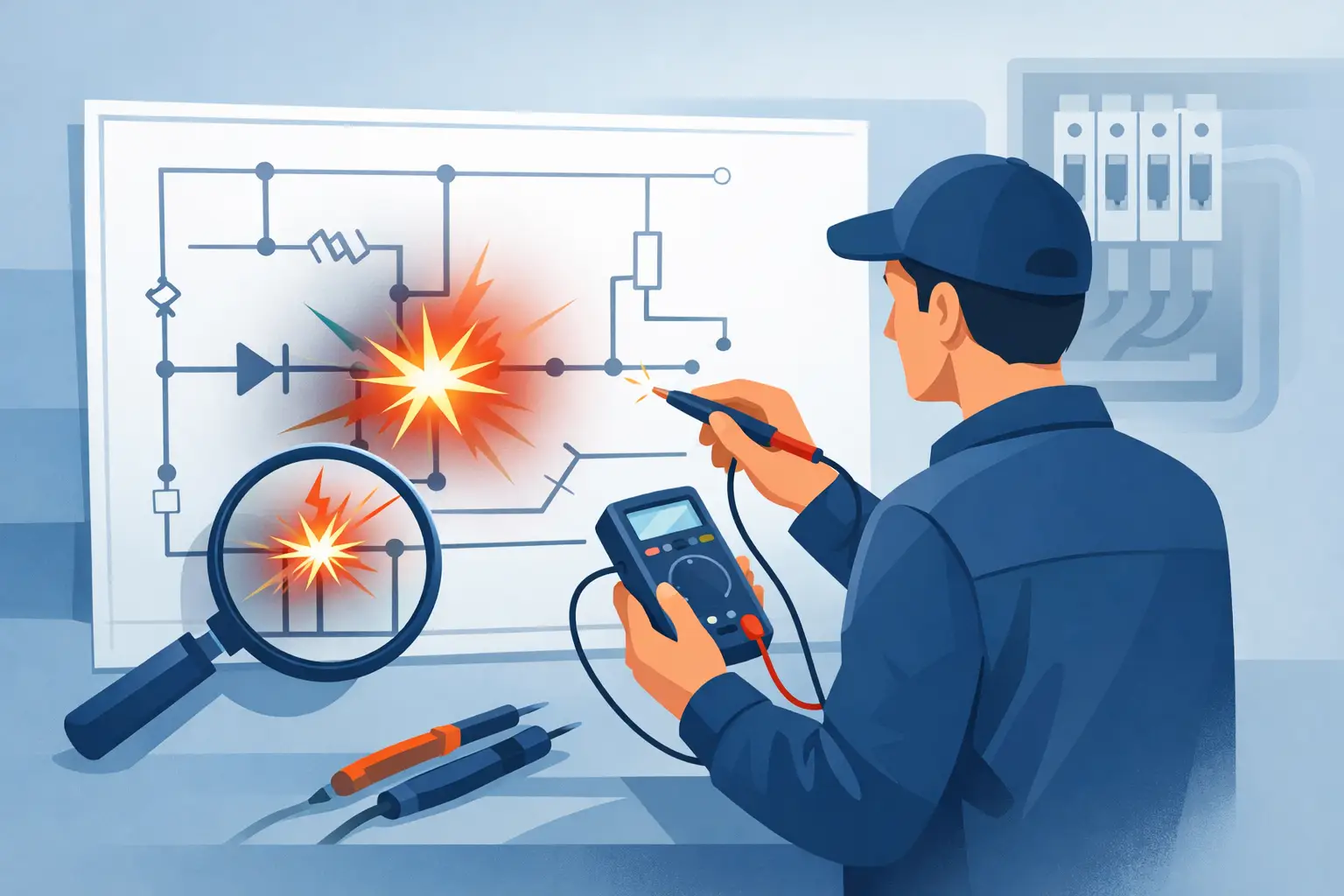
A blown fuse that comes back the second you key on tells you one thing fast – you are not guessing anymore. If you need to trace short circuit with diagram accuracy, the job starts by narrowing the fault to one protected circuit, one branch, and one load at a time.
Most wasted time in electrical diagnosis comes from working backward from symptoms without a correct wiring map. A short to ground can sit in a rubbed harness under a bracket, inside a water-filled connector, or inside the component itself. The diagram turns that from a random search into a controlled test path.
Why a diagram matters when you trace a short circuit
A fuse blows because current is higher than the circuit is designed to carry. In vehicle wiring, that usually means the power side of the circuit is touching ground before the intended load, or a component has internally failed and is pulling too much current.
The diagram shows you what is actually on that fuse. That matters because one fuse often feeds several branches. It may power a relay, a switch, multiple lamps, a control module, and a sensor reference on the same line. Without the diagram, you can unplug parts at random and still miss the section where the wire is pinched.
With the right vehicle-specific diagram, you can see the fuse location, wire colors, splice points, connector names, grounds, and every device on that path. That is the difference between a two-hour diagnosis and pulling trim for half a day.
What the diagram should show
Before testing, confirm you are looking at the exact year, make, model, engine, and system. Mid-year changes and trim differences can put you on the wrong wire fast.
A useful short-circuit diagram will show the fuse or fusible link feeding the circuit, wire color and gauge, all connectors and splice packs, switches and relays, component loads, and normal ground locations. If the circuit passes through a module, note whether the module is switching power or switching ground. That changes where you expect to find the short.
If the fault is in lighting, HVAC, power windows, trailer wiring, or an accessory circuit, zoom in on that branch only. Do not try to read the full vehicle electrical layout at once. Work one protected path at a time.
Trace short circuit with diagram: the fastest method
Start with a confirmed complaint. If the fuse blows immediately, note whether it blows with the key off, key on, or only when a switch is commanded. That single detail can remove half the circuit from suspicion.
If the fuse blows key off, the short is on a section that stays powered at all times. If it only blows with key on, look at ignition-fed branches. If it only blows when you turn on headlights, press the brake pedal, run the blower, or move a seat, the short is likely on that switched branch or load.
Replace the fuse with a current-limited test method. Many techs use a fused jumper, a circuit breaker, or a test light in place of the fuse. The goal is to keep the circuit active without burning through a pile of fuses. Once the circuit is energized safely, you can disconnect sections and watch the indicator.
Now follow the diagram in order. Start at the fuse output and identify every branch after it. Unplug loads one by one in the sequence shown. If the short goes away when a component is disconnected, you have narrowed the problem to that component or the harness section leading to it.
If disconnecting the end components does not remove the short, move upstream to intermediate connectors and splice points. This is where the diagram saves time. A single unplugged connector can divide the circuit into front harness versus rear harness, left door versus body, or dash harness versus engine bay.
A practical example of diagram-based isolation
Say a tail lamp fuse blows every time the parking lamps are turned on. The diagram shows the fuse feeding front marker lamps, rear tail lamps, license plate lamps, and panel illumination through a switch and a splice.
Do not start by removing the dash. Start where the circuit branches widest. If there is a body connector feeding the rear harness, unplug it and switch the lamps on again. If the fuse no longer blows, the short is in the rear section. If it still blows, the short is in the front lighting or panel illumination side.
From there, keep dividing the circuit using the connector layout on the diagram. Rear harness disconnected and short gone? Plug that back in, then disconnect left tail lamp, right tail lamp, and license lamp branches individually. If one branch clears the fault, inspect that wire run for trailer-tap damage, crushed insulation, corrosion, or a bulb socket melted into the housing.
This is the core method every time: energize safely, split the circuit where the diagram gives you a clean divide, and keep reducing the suspect area.
Using resistance tests the right way
Resistance checks can help, but only if the circuit is powered down and isolated. Pull the fuse, disconnect the battery if needed, and unplug modules that should not see meter voltage. Then measure from the load side of the fuse to ground.
If you read very low resistance to ground on the power feed, that supports a short-to-ground condition. But be careful. Some circuits naturally show continuity through bulbs, motors, or module internal paths. That is why the diagram matters. You need to know whether you are seeing a real fault or a normal route through a load.
A cleaner approach is to disconnect branches while watching resistance. When the low-resistance path disappears, the branch you unplugged contains the problem. On long harness runs, this is often faster than visual inspection alone.
Where shorts usually happen
Most vehicle shorts are not in the middle of an untouched harness. They happen where the wiring moves, rubs, heats up, or gets modified. Door jamb boots, trunk hinges, seat tracks, radiator support areas, trailer wiring splices, aftermarket radio connections, and engine harness contact points are common failure zones.
Water intrusion also changes the game. A connector with green corrosion can bridge adjacent terminals or lower insulation resistance enough to cause intermittent fuse failures. If the short shows up only in rain, after washing, or with humidity, pay close attention to exterior connectors, lamp housings, and under-carpet splices.
There is also the component-vs-harness question. A dead short inside a blower motor, ABS pump, or lamp socket can look just like a rubbed wire. The diagram helps because you can unplug the component and separate it from the feed wire quickly.
What slows the job down
The biggest mistake is testing without exact fitment information. Similar vehicles can use different splice locations, wire colors, fuse assignments, and connector views. If the diagram is wrong, your test path is wrong.
The second mistake is replacing the fuse over and over instead of using a controlled load method. That tells you nothing except that the short is still there. The third is skipping intermediate connectors and chasing the whole harness physically. Let the diagram show you where to divide the circuit first.
It also depends on whether the short is hard or intermittent. A hard short is easier because it fails every time. An intermittent short may need harness movement, heat, moisture, or component operation to show up. In those cases, keep the test setup active and wiggle the harness sections shown on the diagram while watching your indicator.
When a vehicle-specific wiring diagram pays for itself
If you are tracing a simple exposed circuit, a generic manual may get you close. But once the circuit passes through modules, splice packs, shared power feeds, or trim-dependent options, close is not enough.
A vehicle-specific diagram saves time because it shows the actual path for that exact system on that exact vehicle. That is especially useful when you need to isolate one component fast instead of searching broad manual sections. For DIY repairs and shop work alike, speed comes from knowing what is connected before you unplug anything.
If you need the fastest route, start with the exact diagram for the exact circuit. Carwiringnew.com is built around that workflow – select the vehicle, select the component, and go straight to the wiring information you need.
A short circuit is rarely hard to understand. What makes it expensive is searching too much wire when the fault only lives in one branch. Use the diagram to cut the circuit into smaller pieces, and the bad section usually shows itself sooner than expected.