
Guide to Diagnosing Voltage Drop in Cars

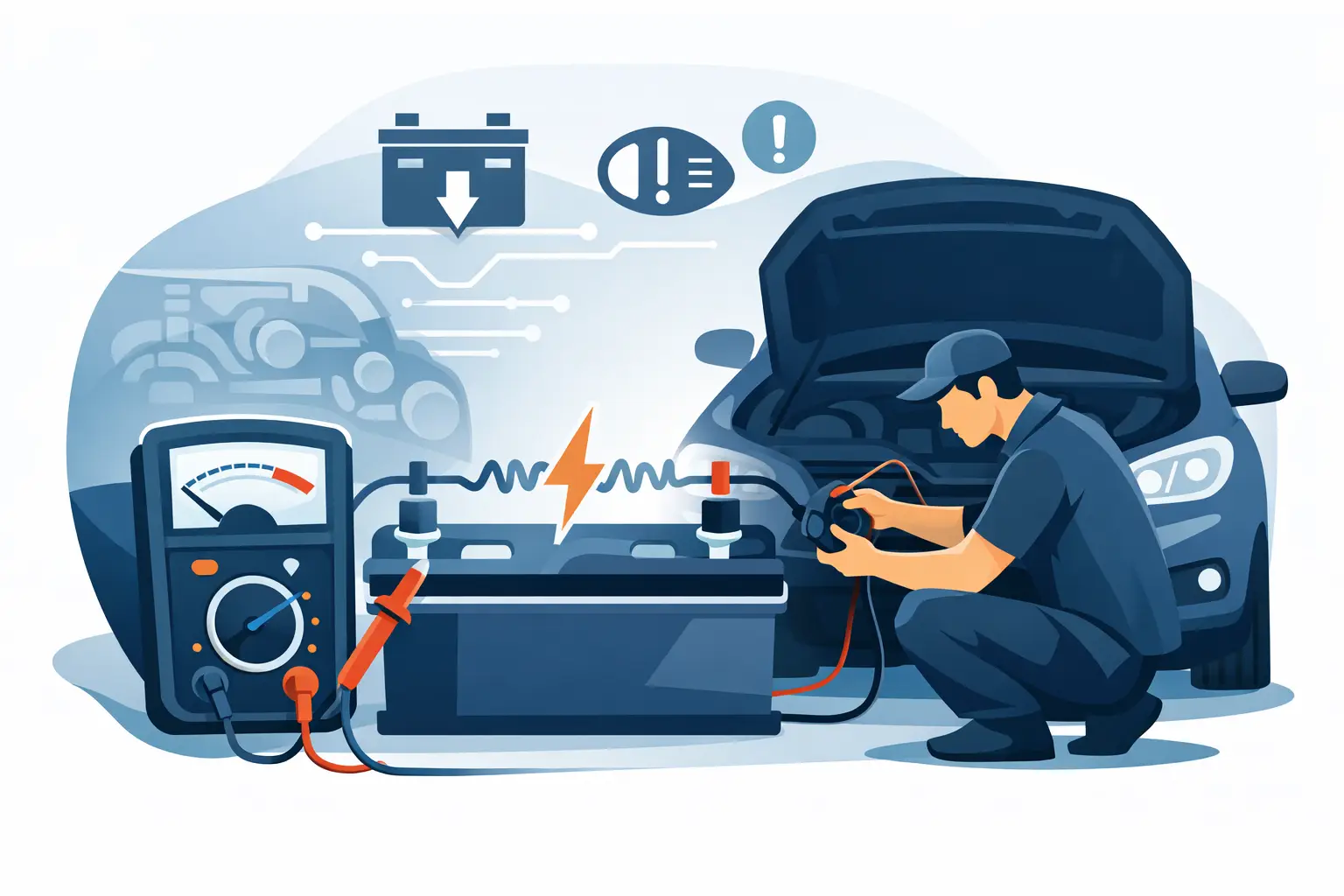
A headlight that looks weak, a starter that drags, a fuel pump that has power on paper but not in real operation – these are the jobs where a guide to diagnosing voltage drop in cars saves time. If voltage is getting lost across a cable, connector, switch, relay, or ground, a basic power check can mislead you. You may see battery voltage at one point with no load, then watch the circuit fail when it actually has to work.
Voltage drop testing is different from simple continuity testing. It checks how well a circuit carries current under load. That matters because a wire can look fine, a fuse can test good, and a connector can still create enough resistance to cause a real problem.
What voltage drop actually tells you
A voltage drop test measures how much electrical pressure is lost as current moves through part of a circuit. In a healthy high-current path, that loss should be low. If the number is too high, resistance is present where it should not be.
That resistance usually comes from corrosion, loose terminals, damaged wire strands, overheated connectors, poor grounds, or worn contacts inside a relay or switch. The key point is simple: voltage drop is not the problem by itself. It is evidence that the circuit is wasting voltage before it reaches the load.
This is why a circuit can show 12 volts with a test light or meter and still fail to run a motor, lamp, or control module correctly. The circuit has voltage available, but not enough current delivery once the load is turned on.
Tools you need before you start
You do not need a lab setup. A decent digital multimeter with a DC voltage setting is enough for most jobs. Meter leads with sharp probes help, and back-probe pins are useful when you need to test connectors without damage.
A wiring diagram matters just as much as the meter. Without the correct circuit path, you can waste time checking the wrong branch or miss a splice, ground location, or inline connector. If you are tracing an exact vehicle and component, using a vehicle-specific diagram from Carwiringnew.com can cut out a lot of guesswork.
A battery in poor condition can distort your test results, so start there. If system voltage is already low, fix that first.
Guide to diagnosing voltage drop in cars: the basic method
The rule is straightforward. Test the circuit while it is operating. Voltage drop tests mean very little on an unloaded circuit.
Set your meter to DC volts. Then place one lead on the upstream side of the section you want to test and the other lead on the downstream side. Turn the circuit on so current is flowing. The meter will display the voltage being lost across that section.
For example, if you are testing the positive cable from the battery to the starter, place the red lead on the battery positive post itself, not the cable terminal, and the black lead on the starter B+ terminal. Crank the engine. The reading is the voltage drop across the positive side of that cable path.
Then test the ground side. Place one lead on the starter housing and the other on the battery negative post. Crank again. That reading shows the voltage drop on the return path.
This is where people often go wrong. They test only the power side, find nothing obvious, and replace a good starter. Ground-side voltage drop is just as common, and sometimes worse.
What counts as too much voltage drop
It depends on the circuit. High-current circuits like starters can tolerate more total drop than low-current sensor circuits, but the acceptable limit is still not large.
As a general working rule, many technicians look for about 0.2 volts or less across a connection, switch, or ground point, and roughly 0.5 volts or less across an entire side of a loaded high-current circuit. On a starter circuit, total system drop may be somewhat higher during cranking, but a reading that clearly jumps above normal on one section points to the fault.
For low-current circuits, even small losses matter. A tenth or two in the wrong place can affect module operation, reference voltages, and signal quality.
If you do not have a factory spec, compare sections. A clean connector or good ground on a similar circuit can give you a practical baseline.
Start with the whole path, then narrow it down
The fastest method is not always checking every connector one at a time. Start broad.
If a blower motor is slow, test from battery positive to the blower motor positive terminal with the blower on high. If the reading is excessive, you know there is too much resistance on the feed side. Then split the circuit into smaller sections: battery to fuse box, fuse box to relay, relay to switch, switch to motor, and so on.
Do the same on the ground side. Test from the blower motor ground terminal to the battery negative post. If the drop is high there, narrow it down between the motor ground, body ground point, engine ground strap, or battery negative path.
This approach saves time because you identify the bad half of the circuit first, then the bad section, then the exact bad connection.
Common places where voltage drop shows up
Battery terminals are still the first place to look, especially when corrosion is hidden between the post and terminal. Fuse box feed connections, relay sockets, bulkhead connectors, body grounds, trailer wiring splices, and aftermarket accessory taps are also common failure points.
On older vehicles, ground eyelets bolted to painted or rusty sheet metal cause a lot of intermittent faults. On higher-heat circuits, connector terminals can lose tension and create resistance even when they do not look burned. On starter and charging circuits, damaged cable strands under the insulation are easy to miss.
If the symptom changes with vibration, heat, or steering movement, suspect a partially broken conductor or loose terminal tension rather than a fully open circuit.
A practical example: slow crank with a good battery
Say the battery tests good and measures 12.6 volts at rest. The engine still cranks slowly.
First, test battery positive post to starter B+ while cranking. If you see 1.4 volts drop, that is too high for that single path. Move your black lead step by step backward through the cable route. Check the cable terminal, any junction block, and the starter connection. Once the reading drops sharply, the excessive resistance is between your last two test points.
Now test the ground side from starter case to battery negative post. If you see 0.9 volts, that side also has a problem. Check engine block to battery negative, then engine to body straps if equipped. It is not unusual to have issues on both sides.
This is why parts-swapping fails on electrical jobs. One slow-crank complaint can be caused by a positive cable issue, a bad engine ground, internal starter wear, or a combination of all three.
When voltage drop testing can mislead you
The test is powerful, but it still depends on circuit load. If the load is not being commanded on, the reading may stay low even though the path is bad. That means you may need to activate the circuit with a scan tool, jumper, or by operating the component normally.
Intermittent faults are also tricky. A connector may pass the test cold, then fail hot. Wiggling the harness carefully during the test can expose this, but do not force a connector and create a new problem.
Electronic control circuits need extra care. On a sensor ground or module reference circuit, do not assume the same voltage-drop limits used for a starter cable. Know what part of the circuit you are testing and what normal operation looks like.
Why the wiring diagram matters
A voltage drop number only helps if you know what sits between your two meter leads. That is where many DIY repairs stall. The circuit may pass through a fuse block, a splice, a connector behind a kick panel, a control module, and a chassis ground shared with three other systems.
A correct wiring diagram lets you isolate the exact path instead of chasing color codes and guesses. It also shows whether you are testing the feed side, the controlled side, or a shared ground network that can affect multiple symptoms at once.
If a fuel pump, lighting circuit, or charging path is acting up, exact vehicle fitment matters. Wire colors, connector IDs, and ground locations can change within the same model line.
A better habit than checking for power alone
If you only check for battery voltage at the component, you can miss the real fault. A circuit can show power with almost no current flow and collapse the moment the load is applied. That is why voltage drop testing belongs in the first round of electrical diagnosis, not the last.
When the numbers are low, move on confidently. When they are high, split the path and keep narrowing it until the fault is obvious. That process works on starter circuits, lighting, fuel delivery, cooling fans, and a long list of drivability complaints tied to poor electrical performance.
The next time a circuit has power but still does not do its job, stop treating voltage as an all-or-nothing check. Measure what the circuit is losing under load, and the bad connection usually stops hiding.