
Trace a Short Circuit Fast (Without Guessing)

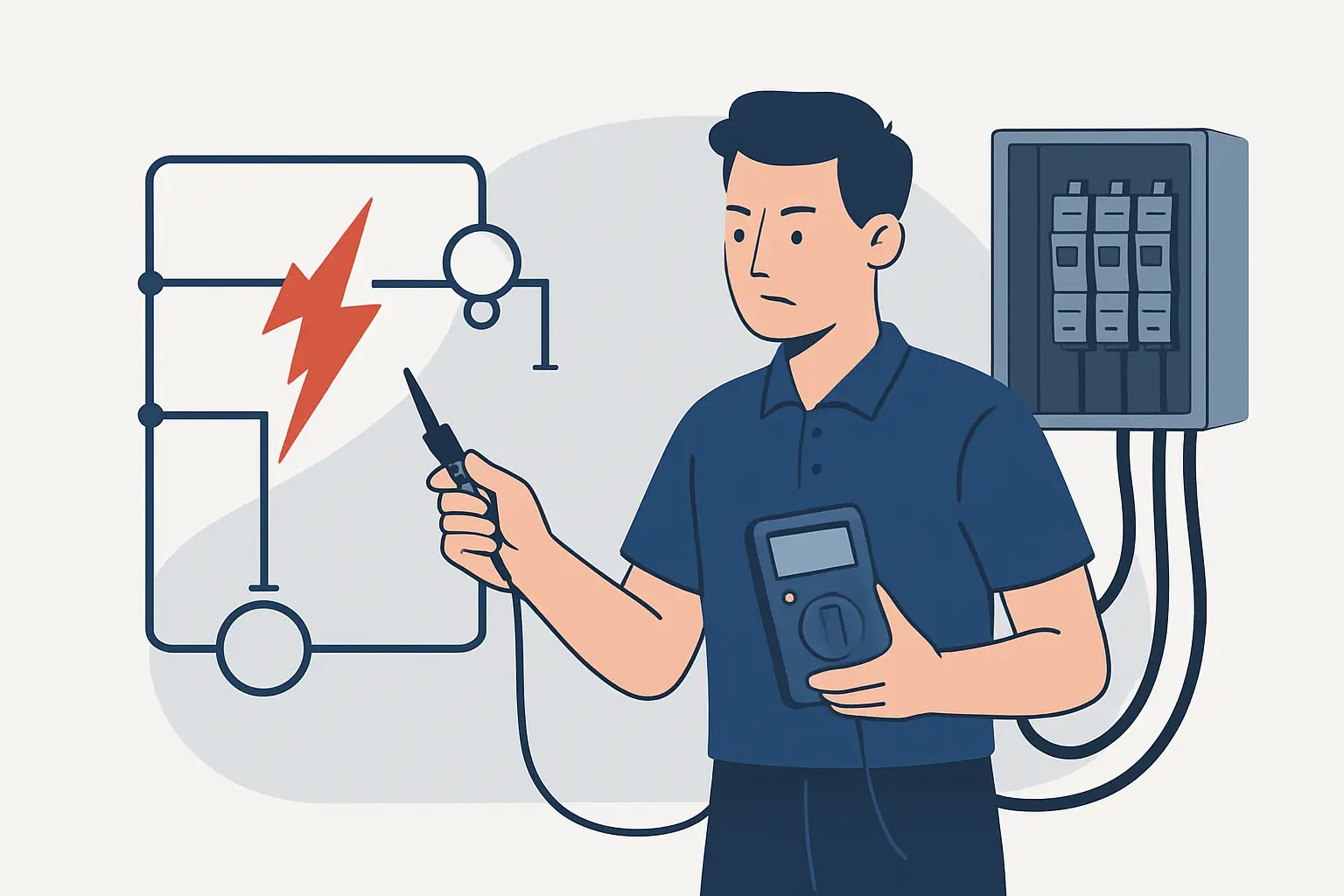
A fuse that pops the second you replace it is not “mystery electrical.” It is a direct clue: power is reaching ground on a path that is not supposed to exist. The fastest way to fix it is to stop swapping fuses and start proving where voltage is going.
This practical process is built for real-world work – driveway or shop – and it scales from a simple trailer light short to a deep harness rub under a dash.
What “short circuit” usually means in a car
On most vehicle circuits, the failure you are chasing is a short to ground on the load side of the fuse. That means the fused power feed touches metal body ground or a grounded wire somewhere after the fuse, so current spikes and the fuse opens.
You can also see a short to power (two powered wires touching) or an internal short inside a component (motor, solenoid, module). The method below still works, but the decision points change: you isolate sections until the short disappears.
Safety and setup that saves time
If you are tracing a dead short, don’t keep installing fuses. Use a current-limited substitute so you can test without melting wiring.
A fused jumper wire, a circuit breaker style fuse, or a short finder tool can work. A simple approach that’s available in most toolboxes is a test light in place of the fuse. With the short present, the light glows. As you disconnect parts of the circuit, the light dims or goes out. That gives you repeatable feedback without sacrificing fuses.
Disconnect the battery when you are unplugging modules or opening harnesses, then reconnect for live testing only when you are ready. And if the circuit involves airbags, steering column, or seat pretensioners, follow factory precautions. Some shorts are not worth risking a deployment.
Tools that actually move the needle
You do not need a lab bench. You do need the right basics.
A digital multimeter with continuity and amperage, a test light, a handful of back-probe pins, and a non-contact thermometer or your hand for “is this wire heating” checks cover most cases. If you have a clamp meter that reads low DC amps, it can speed up confirmation.
The biggest time saver is the correct wiring diagram for the exact year, make, model, and system. Generic diagrams waste hours because fuse labeling, splice locations, and connector pinouts change across trims and mid-year updates. If you need a vehicle-specific diagram by component, you can pull it quickly through the vehicle selector at Carwiringnew.com.
How to trace short circuit issues: a workflow that doesn’t wander
The whole job is isolating the short by dividing the circuit into smaller and smaller pieces until only one section is left.
Step 1: Confirm what type of short you have
Start by verifying the complaint:
If the fuse blows immediately with key off, the circuit is hot at all times and the short is present without any switching.
If it blows only with key on, only with the headlights on, only in reverse, or only when you hit the brake, the short is tied to an enable condition. That matters because you can reproduce it on command, and you can focus on branches that are only energized in that mode.
If the fuse blows only when you move the harness, turn the wheel, open a door, hit a bump, or shift into gear, treat it as a harness rub or pinch until proven otherwise.
Step 2: Identify what the fuse feeds (don’t skip this)
Look up the fuse and map everything downstream: connectors, splices, ground points, and loads (lamps, motors, relays, modules). You are trying to learn where the circuit splits into branches.
In practice, the “one fuse” that keeps popping often feeds multiple items. If you do not know the branches, you can unplug ten things and still be chasing the wrong leg.
Step 3: Replace the fuse with a test indicator
With the fuse removed, connect a test light across the fuse terminals. If the short is present and the circuit is trying to draw current, the light turns on.
Two important notes:
First, if the circuit is controlled by a relay that is currently off, the test light may stay off until that relay energizes. Turn on the condition that normally blows the fuse.
Second, some circuits have modules that “wake up” and then go to sleep. Your indicator can change over time. Work with the circuit in the state that reproduces the failure.
Step 4: Split the circuit at the easiest disconnect points
Now you start dividing. Unplug the most accessible load or connector that removes a large portion of the circuit. Watch the test light.
If the light goes out, the short is in what you just disconnected (component or the harness section leading to it).
If the light stays on, the short is still on the powered side that remains connected. Keep moving upstream or to the next branch.
This is why the diagram matters. The best next unplug is the one that cuts the circuit in half, not the one that’s closest to your hand.
Step 5: Prove component vs wiring
When the indicator goes out after unplugging a component, don’t assume the component is bad. You still need to separate “internal short” from “short in the pigtail/harness.”
Inspect the connector and pigtail right at the component first. Look for corrosion bridging terminals, backed-out pins, melted plastic, or a wire rubbed through at a sharp bracket.
If it looks clean, reconnect the component and instead unplug the circuit farther upstream (the next connector back). If the short returns only when the component is connected and disappears when it is unplugged, that’s strong evidence of an internally shorted load.
Common offenders are blower motors full of debris and moisture, fuel pump modules with melted connectors, trailer wiring adapters, and aftermarket light bars tied into factory circuits.
Step 6: Use resistance tests correctly (and know their limits)
With battery disconnected and the circuit de-energized, you can measure resistance from the load side of the fuse to ground.
A dead short often reads near 0 ohms, but “near 0” is not a magic number. Harness length, parallel paths, and connected components can change what you see.
A more reliable approach is comparative:
Measure at the fuse, then measure again after unplugging a branch. If the reading jumps significantly when you unplug a section, you removed the short path.
Also remember: some loads are supposed to have low resistance. A motor winding can read a few ohms and still be normal. That’s where the diagram and isolation steps keep you honest.
Step 7: Find the physical damage point
Once you’ve narrowed it to a harness section, your job becomes “where can this wire touch ground?”
Start with the places that move or pinch:
Door jamb boots, trunk lids, hatch wiring, steering column tilt areas, seat tracks, and any harness routed over metal brackets.
Then check heat zones:
Exhaust proximity, radiator support areas, and near blower resistors or power distribution blocks.
Look for shiny copper, flattened loom, missing tape, or a spot that looks “polished” where it has been rubbing. If the short is intermittent, gently flex the harness while watching the test light. When the light flickers, you are close.
If you have access to a thermal camera or even an IR thermometer, the shorted section may warm slightly while the test light is flowing current. Don’t overdo this – you are using a current-limited indicator, not trying to heat the harness.
It depends: two common scenarios that change the approach
When the short is after a relay
Many high-current loads (cooling fans, fuel pumps, blower motors) are fed through a relay. If the relay is off, the fuse may not see the short.
In that case, command the relay on (key on, scan tool output test if available, or the normal condition that turns it on). Then do the same isolation steps on the relay output circuit.
If removing the relay makes the test light go out, the short is on the load side of the relay, not the control side.
When the fuse feeds a module network
If the fuse powers a control module that wakes up other modules, pulling connectors can create side effects that look like progress but are really just shutting the system down.
Here the diagram is essential: you want to unplug the module’s powered connector pin or isolate its power feed splice, not just disconnect random modules until the light changes.
After you find it: fix it so it stays fixed
If the insulation is rubbed through, repair the conductor properly (splice, solder if that’s your standard, or a quality crimp), then re-insulate and re-loom. The key is strain relief: secure the harness so it cannot rub the same edge again.
If a connector is melted, replace the pigtail and address the cause. Melt often means high resistance, loose terminal tension, or an overloaded circuit.
If an aftermarket add-on caused the short, remove the tap and restore the factory wiring. If the add-on is staying, power it with its own fused feed and relay rather than piggybacking on a factory lighting or accessory line.
When you’re done, reinstall the correct fuse, run the circuit through its full operating range, and then do one last harness movement check in the area you repaired.
The fastest techs don’t have magic tools. They keep the circuit energized safely, they split the circuit using the diagram, and they only get hands-on once they’ve narrowed the problem to one section. Do that, and the “short that keeps blowing fuses” turns into a predictable job you can finish and move on from.